Front Line Discounts available across all therapies and packages. Thank you NHS.
Veganuary – Immune Support or Stress?
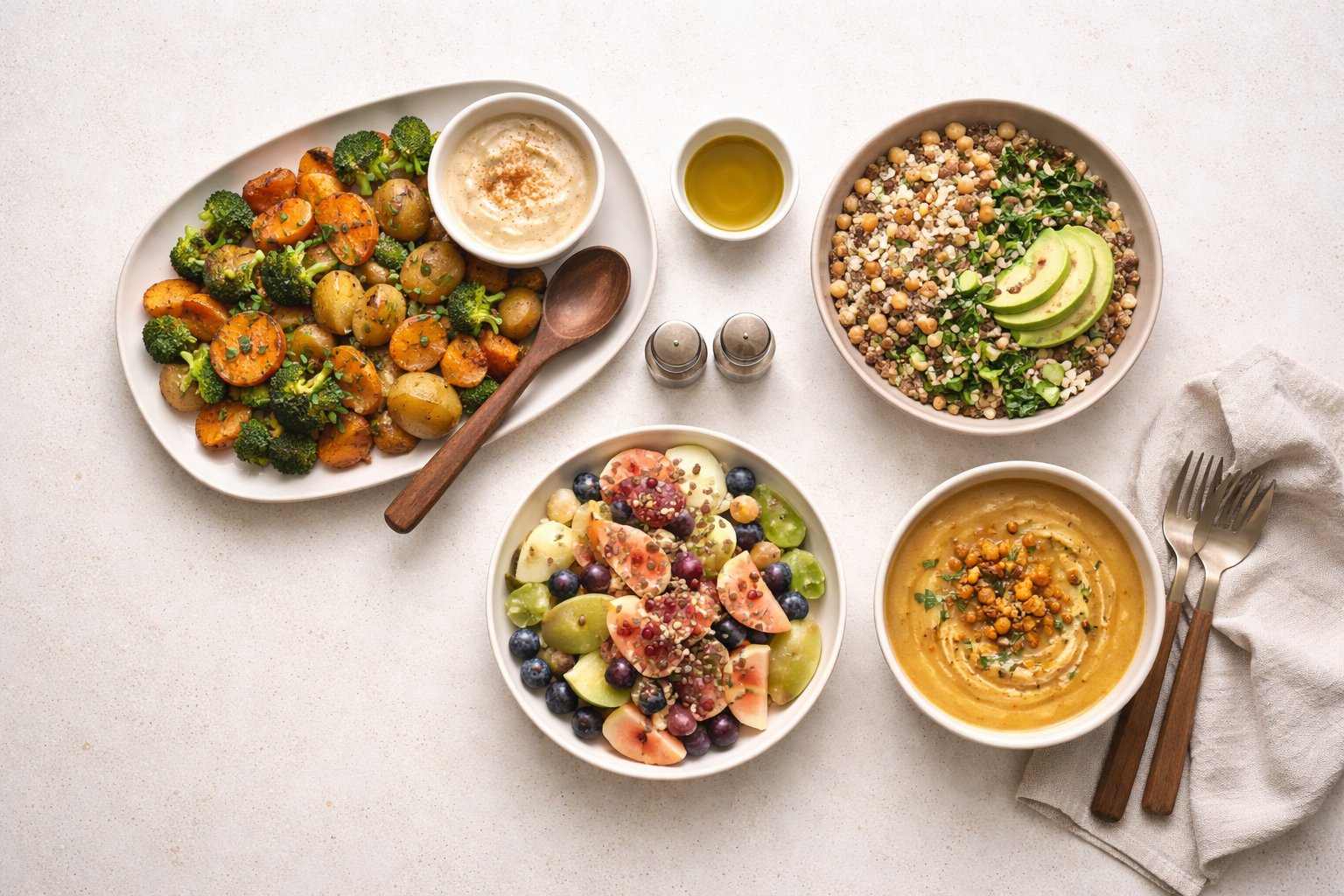
Right – we’ve made it to the end of January. The month that’s become synonymous with Veganuary.
As this time comes to a close, anyone who took part is hopefully taking stock of how the month actually felt in their body.
Often framed as a reset, Veganuary promises lightness, clarity, and better health. But for people with eczema, allergies, or sensitive systems, the experience can feel unexpectedly difficult. If Veganuary has ever left you feeling worse rather than better, you’re not imagining it.
The question isn’t whether plant-based eating is a good idea and if you want to keep solely plant-based foods, this isn’t about stopping – it’s about learning how to work with it in a way your body benefits from and can actually live with. Not all plant-based plates are equal, and immune systems don’t all respond in the same way – particularly at certain times of the year, and especially when sensitivity is already present.
There’s no shortage of health advice now – especially around food. Much of it is well-intentioned, but often trend-led, simplified, selective, or stripped of context, presenting partial narratives as if they’re the full picture. For people with eczema, allergies, or reactive systems, that lack of nuance can quietly contribute to confusion and self-blame, making it easy to ignore meaningful signs from the body and keep pushing through, assuming discomfort is just part of the process.
So let’s explore how to work with plant-based eating in a way that supports long-term skin and immune health, rather than adding to any stress.
Veganuary Has Good Intentions
Veganuary offers an opportunity to explore plant-based eating through the lenses of environmental care, ethical awareness, or simple curiosity about better health. For many people, it provides a clear and motivating structure to try something new, often with the hope of feeling better in their bodies while also doing something positive for the wider world.
At its best, Veganuary invites people to eat more plants, think more consciously about where their food comes from and the impact it has, and reconnect with nourishment after the excess of the festive season. It can encourage greater awareness of ingredients, cooking more from scratch, and stepping away from heavily animal-based or ultra-processed patterns of eating.
For some, it also offers a sense of community and shared intention – a collective pause to reflect on food choices and values. When approached with curiosity and flexibility, Veganuary can be a genuinely nourishing reset and a meaningful starting point for longer-term dietary change.
What’s not to love? That’s pretty lovely stuff.
But January Places Unique Demands on the Body
Winter naturally places increased demands on the immune system. At the same time, the weeks surrounding Christmas and New Year – regardless of hemisphere – often bring disrupted routines, increased sugar and alcohol intake, irregular meals, poorer sleep, and heightened stress.
It’s not uncommon for January to coincide with eczema flares, digestive discomfort, fatigue, or an increase in colds and infections. Even the most nourishing foods can land very differently depending on what the body is already managing.
Context matters. Timing matters. The same dietary change can have very different effects depending on the state of the system it’s entering. For sensitive or reactive bodies, sudden shifts – even well-intentioned ones — can feel less like support and more like an additional demand.
When a system is already working hard to meet the moment, repair, and recalibrate, it rarely benefits from shock or from a narrowing of food choices. Tailored and researched information, gentler transitions, adequate variety, and respect for current capacity are often what allow the body to stabilise, rather than tipping it into further stress.
Plant-Based Eating Can Be Deeply Supportive
Strong and consistent research showing that diets rich in whole foods – and particularly those abundant in plant foods – are associated with improved health outcomes and longevity. Across populations, higher intakes of vegetables, fruits, legumes, whole grains, nuts, seeds, and diverse plant compounds are linked with reduced risk of chronic disease and greater resilience over time.
Within that context, whole plant foods offer an abundance of fibres, antioxidants, polyphenols, vitamins, minerals, and beneficial fatty acids, all of which play an important role in supporting immune response and resilience in both acute and chronic states. They help nourish the gut, stabilise blood sugar, and support the health of interconnected systems – including the skin, hormones, liver detoxification pathways, and nervous system – all of which underpin immune balance and tolerance.
Plant-based eating can absolutely support immune healing. But how it’s implemented matters. For people with eczema, allergies, or sensitive systems, these benefits are most reliably seen when plant-based eating is personalised. That personalisation often looks like paying attention to food tolerance, variety and rotation, protein quality, preparation methods, and timing – rather than assuming that more plants, or stricter adherence, will automatically lead to better outcomes.
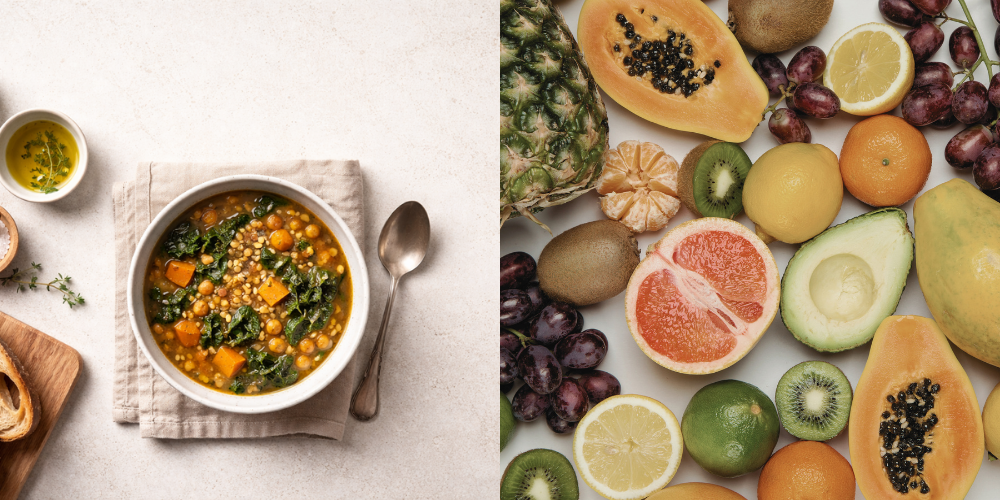
Food Isn’t Just Fuel – It’s Information
Every meal provides information as well as nourishment, shaping how the immune system learns, adapts, and behaves. Food doesn’t just supply nutrients – it sends signals that influence tolerance, inflammation, repair, and resilience.
However, that information is always being received within the context of a particular system. One that may already be depleted, inflamed, stressed, or working hard to manage environmental exposures. In these situations, the same food can communicate very different messages, depending on the body’s current capacity to receive and process it.
This is why immune behaviour is influenced not only by what we eat, but by the internal environment food helps create. Gut health acts as a central communication hub, interacting with the skin, hormones, liver, and nervous system. Blood sugar stability, digestion, and the body’s ability to break down, absorb, and clear everyday inputs all shape how calmly or reactively the immune system responds.
When digestive capacity is compromised – whether through stress, inflammation, nutrient depletion, or repeated immune activation — even nourishing foods can feel like a challenge. The body may struggle to fully access the information those foods are meant to provide, or interpret them as an additional demand rather than support.
This is why food choices don’t act in isolation. They interact with signalling pathways, immune tone, and overall system load. For sensitive systems, supporting the foundations that allow food to be received – digestion, regulation, and recovery – is often just as important as the food itself.
Plant-Based Doesn’t Automatically Mean Anti-Inflammatory
In recent years, Veganuary has grown alongside an explosion of ultra-processed vegan alternatives. While technically plant-based, many products – such as soy-, mushroom-, or pea-protein burgers, meat-free substitutes, vegan cheeses, and ready meals – are highly processed.
From an immune perspective, this matters. Processing changes not just the nutritional profile of a food, but how the immune system encounters it. Highly processed foods are often stripped of their natural fibre matrix, altered in structure, and combined with additives, stabilisers, flavourings, and emulsifiers that the body wouldn’t normally meet in isolation. For some systems, this can increase inflammatory load, strain digestion, disrupt gut balance, and destabilise blood sugar – quietly driving immune reactivity even when a diet appears “healthy” on the surface.
There’s also the issue of protein concentration and repetition. Many modern plant-based alternatives rely heavily on a small number of isolated proteins- most commonly soya, pea, and mushroom. These foods can already act as immune triggers for some people in their whole form. When they’re extracted, concentrated, and eaten frequently – sometimes multiple times a day – the immune system may be exposed to levels it isn’t well equipped to tolerate.
This kind of over-exposure doesn’t cause problems for everyone. But for people with eczema, allergies, or sensitive systems, repeated contact with the same proteins can contribute to immune vigilance, emerging intolerances, or flare-ups that feel confusing and out of proportion to the amount eaten.
It’s also worth remembering that ultra-processed plant-based foods often displace the very elements that make plant-based eating supportive in the first place – diversity, fibre, and the complex plant compounds that help regulate immune responses. When variety narrows and reliance on substitutes increases, immune resilience can quietly erode rather than strengthen.
For sensitive systems, the difference between plant-based and whole-food plant-based can be significant. One prioritises diversity, structure, and context; the other can inadvertently amplify immune stress through concentration, repetition, and processing.
Allergies, Intolerances, and Individual Food Response
While shared principles of good nutrition exist, immune systems do not all operate from the same baseline. Some are naturally more vigilant – quicker to notice change, faster to respond, and slower to stand down once activated. This is particularly true for people with eczema, allergies, or a history of immune reactivity.
In these systems, tolerance tends to be narrower and more context-dependent. Foods that are neutral or supportive for others may be experienced as “too much” when the immune system is already alert, inflamed, or under pressure. This isn’t fragility – it’s an immune system designed to respond early and protectively.
For allergy- and eczema-prone bodies, pushing through symptoms in the name of adaptation often has the opposite effect. Rather than building tolerance, repeated immune activation can reinforce sensitivity, making responses feel stronger over time rather than settling.
Understanding individual food response means recognising that immune tolerance isn’t fixed. It fluctuates with stress, season, health status, and overall load. Working with that variability – rather than overriding it – is what allows plant-based eating to remain supportive rather than reactive.
Understanding Histamine Load
Histamine is a normal and essential immune messenger involved in digestion, immune defence, and nervous system signalling. It plays an important role in stomach acid production, inflammatory responses, and alerting the immune system to potential threats.
Problems arise not because histamine is harmful, but when it accumulates faster than the body can clear it – particularly when the immune system is already activated or under strain.
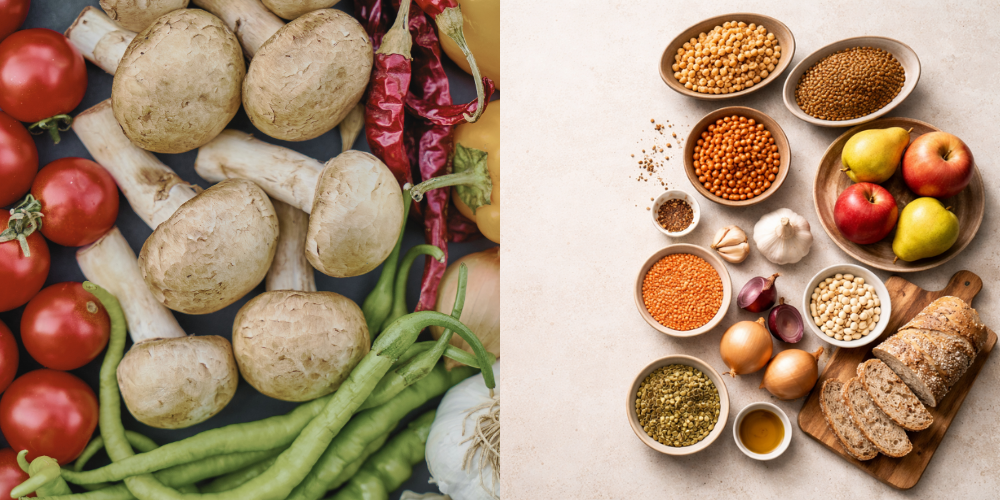
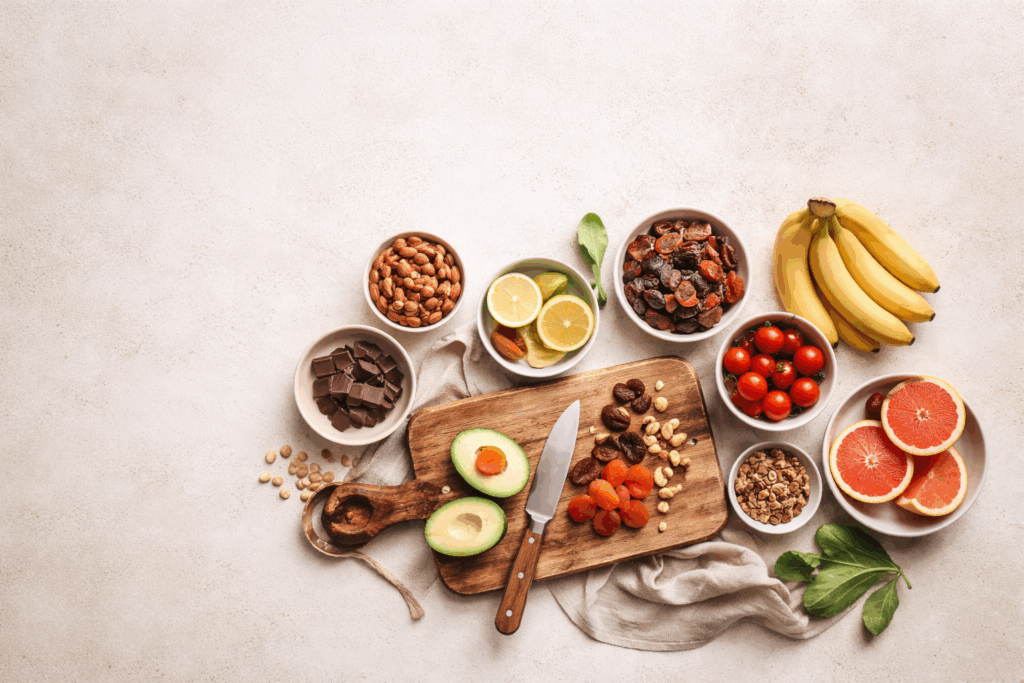
Many common plant-based foods are naturally high in histamine or promote histamine release. These include fermented foods, leftovers, spinach, tomatoes, aubergine, avocado, certain legumes, soy-based products, and some meat-free alternatives. Other foods commonly implicated include fermented vegetables, vinegars, kombucha, citrus fruits, strawberries, bananas, chocolate, nuts, and some seeds.
Some foods are not high in histamine themselves but can act as histamine liberators, encouraging the body to release more histamine internally. These can include tomatoes, citrus fruits, strawberries, alcohol, chocolate, and certain food additives.
While these foods are often tolerated individually, symptoms are more commonly influenced by total load and timing than by any single food. This is especially relevant for people with eczema, allergies, or sensitive systems, where histamine may already be elevated due to factors beyond diet.
Stress, poor sleep, infections, seasonal allergens, gut imbalance, hormonal fluctuations, environmental exposures, and nutrient depletion can all add to histamine burden. When these factors overlap, foods that are normally well tolerated can suddenly feel problematic – particularly during periods of dietary change such as Veganuary.
Histamine sensitivity is rarely about avoiding specific foods forever. It’s about understanding context, recognising cumulative pressure on the system, and knowing when the body may need extra support.
For a deeper exploration of histamine – including clearance pathways, gut involvement, hormones, and how to reduce load without unnecessary restriction – I’ve written more in detail here.
Other Naturally Occurring Food Compounds
Histamine is just one example of how naturally occurring compounds in foods can interact with sensitive systems. Others – such as oxalates, salicylates, and certain fermentable carbohydrates – can have similar effects for some individuals, particularly when overall immune load is already high.
These compounds are naturally present in many plant foods and often come packaged with valuable nutrients, antioxidants, and fibres. They are not inherently harmful, and most people tolerate them well. However, in reactive or sensitised systems, the total amount, frequency, and timing of exposure can influence how the body responds.
Oxalates, for example, are found in foods like spinach, beetroot, nuts, seeds, and some legumes. Salicylates occur naturally in many fruits, vegetables, herbs, spices, and teas. Fermentable carbohydrates are present in a wide range of otherwise nourishing plant foods. Individually, these foods may be well tolerated – but when combined, repeated, or layered on top of other stressors, they can contribute to symptom flares in susceptible people.
As with histamine, responses are rarely about a single food. They’re shaped by context – including gut health, nutrient status, stress, sleep, hormonal balance, and overall immune tone. What feels problematic at one point in time may be well tolerated later, once the system has more capacity.
The key takeaway is not avoidance, but awareness. Understanding that different bodies respond differently allows plant-based eating to remain flexible and supportive, rather than rigid or fear-driven. These compounds are part of why personalisation and variety matter – especially for those navigating eczema, allergies, or other immune sensitivities.
What an Immune-Supportive Veganuary Can Look Like
Whether Veganuary feels supportive or stressful often comes down to how it’s done – not the idea itself. From an immune perspective, there’s an important difference between patterns that quietly increase strain and those that genuinely support balance and repair. Immune Stress vs Immune Support.
An immune-stress Veganuary often looks like:
- Low or inconsistent protein intake, which can impair skin repair and immune signalling
- A high reliance on ultra-processed plant-based foods, increasing gut and systemic inflammation
- Poor digestion, limiting nutrient absorption even when food quality looks good on paper
- Fibre overload without enough diversity, leading to bloating, irritation, or discomfort
- Repeated eating and exposure to the same foods and ingredients
- Failure to identify potential trigger foods
An immune-supportive Veganuary tends to prioritise:
- Whole, recognisable plant foods over replacements
- Fibre diversity rather than sheer volume
- Stable blood sugar across the day
- Adequate protein from a range of plant sources
- Foods chosen with digestion and tolerance in mind
The difference is subtle – but meaningful.
Rather than focusing on restriction or novelty, an immune-supportive approach is grounding and steady.
Meals are built around:
- A wide range of vegetables (variety over perfection)
- Whole plant protein sources
- Healthy fats
- Slow-release carbohydrates
- Knowledge around individual dietary needs
There’s also an emphasis on:
- Simplicity over complexity
- Cooking methods that support digestion
- Consistency over constant experimentation
This helps avoid the common January trap of replacing one highly processed way of eating with another – just wearing a different label.
A Gentler Way to Approach Veganuary
For sensitive systems, Veganuary works best when it’s approached as an exploration rather than a test of willpower.
That might look like:
- Progress over perfection
- Adding plants in, rather than aggressively restricting foods out
- Pausing or adjusting if symptoms worsen
- Using the month as a learning experience, not a pass-fail challenge
The body’s feedback matters. Discomfort isn’t something to push through.
When Veganuary Might Not Be the Right Time (And That’s OK)
There are times when such a broad and strict dietary shift simply isn’t the most supportive choice.
If someone is already:
- Highly inflamed
- Very reactive
- Under-eating or struggling with energy
…then stabilising first may be far more beneficial than doubling down on change.
Immune health isn’t built through extremes. It’s built through responsiveness, nourishment, and meeting the body where it is.
A Closing Thought
The vegetarian and vegan movements have done vital work in championing more conscious, ethical, and sustainable food systems – and they offer a welcome antidote to the absurd, extreme and reductionist carnivore only dietary models.
Veganuary can be deeply supportive – or quietly stressful – depending on how it’s approached.
For people with eczema, allergies, or sensitive immune systems, reactions don’t mean that plant-based eating is “bad”, or that you’ve done something wrong. More often, they’re a sign that the immune system needs more precision, more pacing, and more care – not more restriction.
Whole-food, personalised plant-based eating is where health lives. An immune-supportive approach prioritises whole foods, variety, and rotation, while respecting individual tolerance and the state of the whole system.
Sensitive bodies benefit from flexibility, not one-size-fits-all advice. Used well, Veganuary becomes a framework to explore foods that feel safe and supportive – not something the body has to force or endure.
A plant-based approach that honours that is one worth keeping.

A fan of people, plants, leisurely feasts and a good brew, she runs clinics, workshops, women’s circles and wellbeing retreats alongside developing bespoke lifestyle plans for people with complex allergy needs.
Sophie is a certified and registered multi-disciplinary practitioner specialising in the field of immune health and allergy.


